Year-Round Teen Portfolio Program

Program Overview

Standing out in college portfolio reviews requires more than casual talent—it demands technical discipline, spatial awareness, and a deep understanding of direct observation.

Our Sunday Portfolio Program offers a structured, atelier-style environment where students move beyond drawing from photographs to master the fundamental skills prioritized by top-tier art universities and admissions panels.

Organized into five standalone 6-week modules across the academic year, students learn comparative measurement, value logic, structural figure drawing, and classical oil painting. Take a single module to targeted-refine a specific skill, or complete all five to build a comprehensive, application-ready portfolio.

Why Study Atelier Dojo?

  • 100% Direct Observation: Work directly from 3D plaster casts, high-contrast still lifes, and live professional models.

  • All-Inclusive Tuition: Zero supply lists. Professional-grade charcoal, graphite, archival papers, artist-grade oil paints, mediums, and model fees are completely provided.

  • Small Studio Caps: Capped at 12 students to guarantee direct, individualized mentorship at the easel every session.

  • SlideRoom & Application Ready: Every 6-week module yields finished high-level deliverables and digital portfolio documentation guidance.

Who This Program Is For

Designed for Motivated Young Artists (Ages 14–18)

This program is tailored specifically for high school students, gap-year artists, and rising teens who are ready to move beyond basic hobby classes and take their artistic development seriously.

  • College-Bound Fine Arts & Design Applicants: Students preparing portfolio submissions for top-tier BFA programs, art institutes, or university design degrees (such as RISD, Pratt, Cooper Union, CalArts, or UT Austin) who need strong, observational "from life" work for SlideRoom.

  • Classical Realism & Atelier Enthusiasts: Young artists who love realistic drawing and painting and want to learn formal, traditional techniques in a professional studio setting.

  • Students Seeking Technical Rigor: High schoolers who feel they have maxed out their school's current art curriculum and want structured mentorship in comparative measurement, anatomical drawing, and oil painting.

Note: No prior classical experience is required, but students should bring a strong desire to focus, practice deeply, and spend extended studio time working at an easel.


Sessions Overview

SESSION I: CAST DRAWING & COMPARATIVE SIGHTING (FULL)

Sep-Oct | Sundays | 1:00 pm – 4:30 pm

Master the core mechanics of traditional observational accuracy. Students learn comparative measurement, plumb lines, and light logic while working directly from 3D plaster casts. Outcome: One master cast drawing and comparative construction process pages.

SESSION II: STRUCTURAL FIGURE DRAWING & ANATOMY (FULL)

Nov-Dec | Sundays | 1:00 pm – 4:30 pm

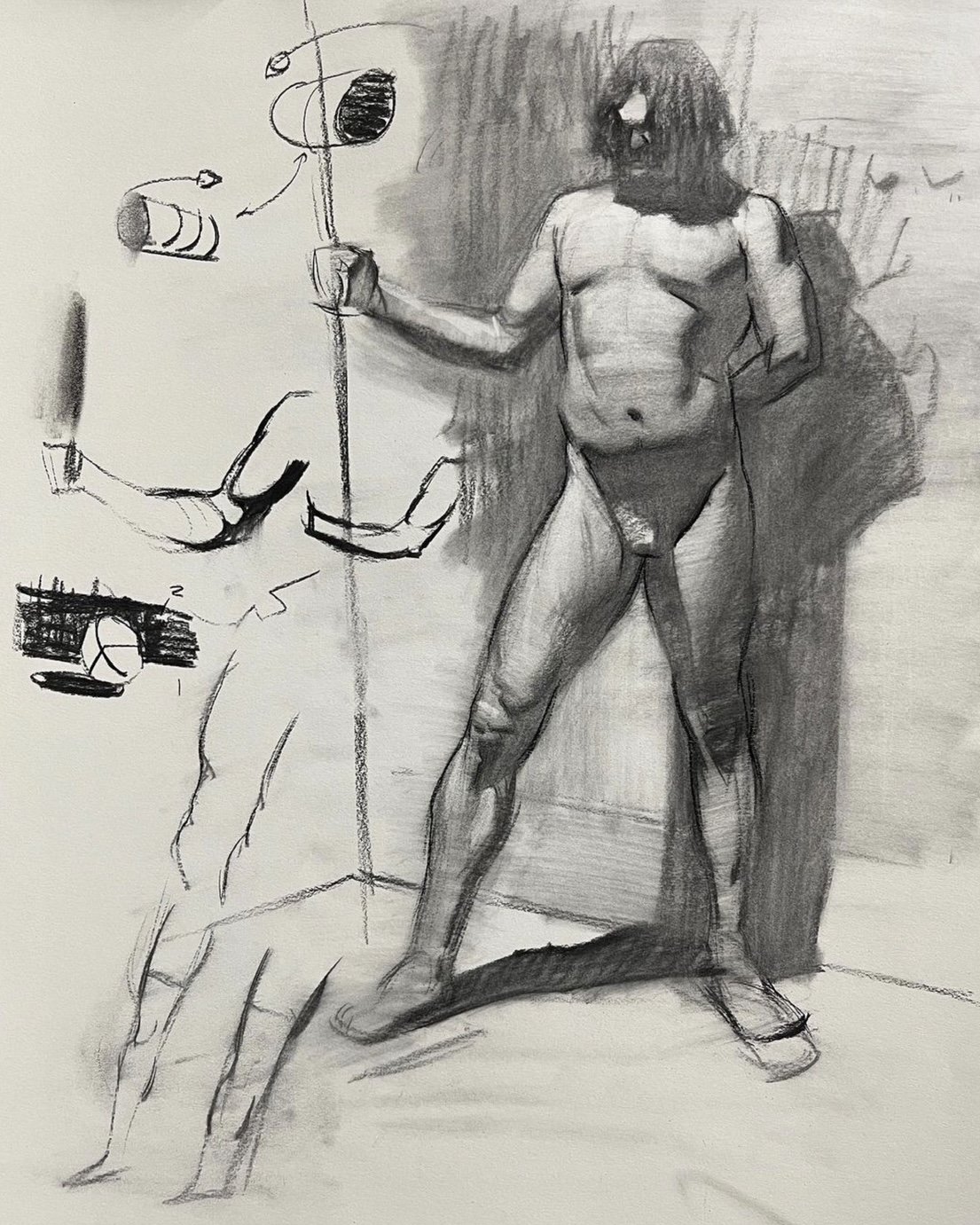
Apply comparative measurement directly to the living human form. Working with professional live models, students explore gesture, anatomical landmarks, weight distribution, and tonal modeling. Outcome: A long-pose structural figure drawing and a curated set of anatomical gesture studies.

SESSION III: MONOCHROMATIC OIL PAINTING & VALUE

Jan-Feb | Sundays | 1:00 pm – 4:30 pm

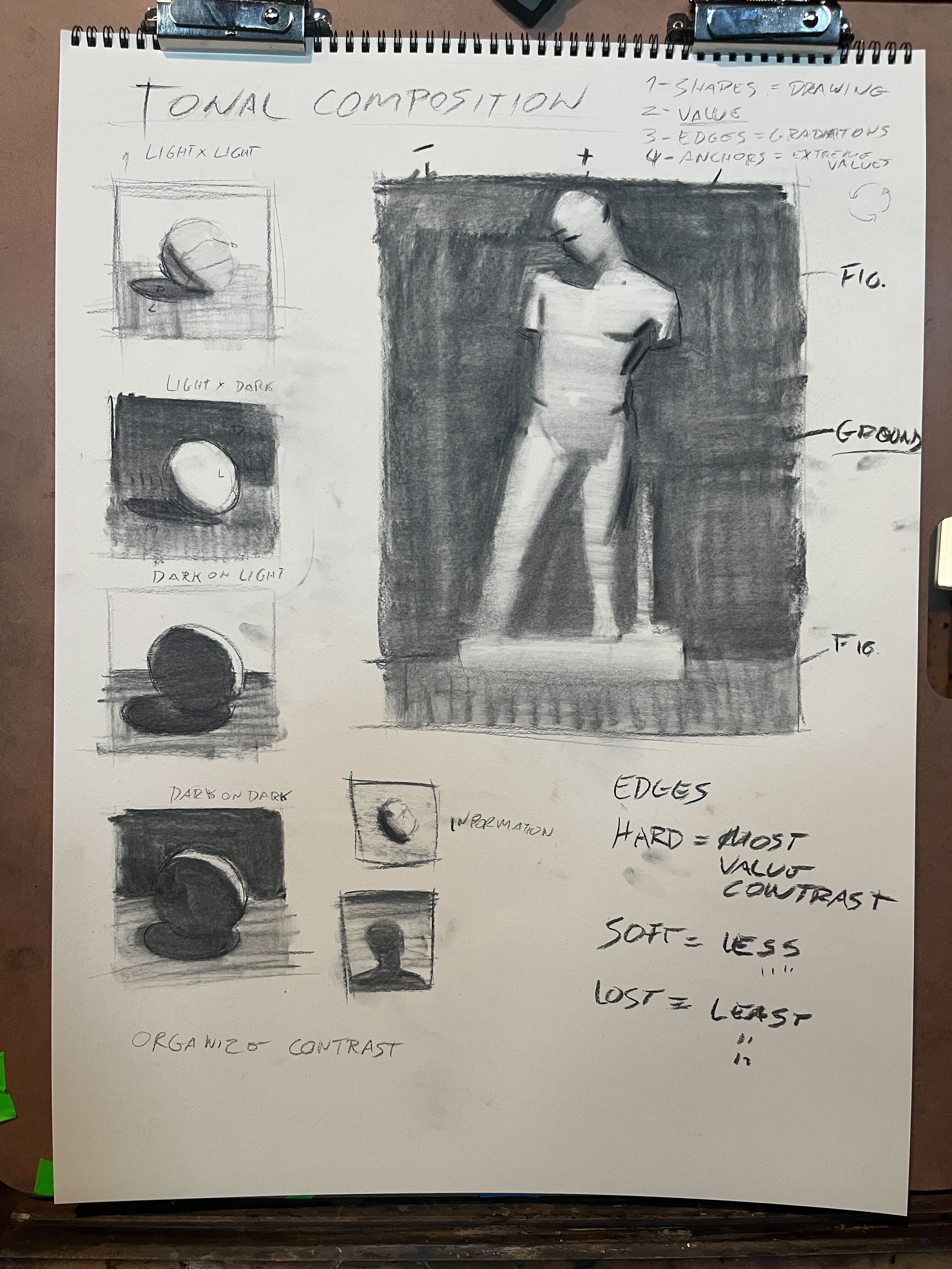
Bridge drawing skills into oil paint without the complexity of color. Students master paint application, brush control, wipe-out techniques, and edge control through single-color tonal painting (grisaille). Outcome: One finished high-contrast tonal oil study and a value/edge control reference sheet.

SESSION IV: COLOR THEORY & THE LIMITED PALETTE

Feb-Mar | Sundays | 1:00 pm – 4:30 pm

Master color temperature, hue, and harmony using the legendary 4-color Zorn Palette. Students translate value structures into color and form building using direct observational setups. Outcome: One finished limited-palette oil painting and a Zorn Palette mixing chart.

SESSION V: OBSERVATIONAL PORTRAITURE & PORTFOLIO SYNTHESIS

Mar-Apr | Sundays | 1:00 pm – 4:30 pm

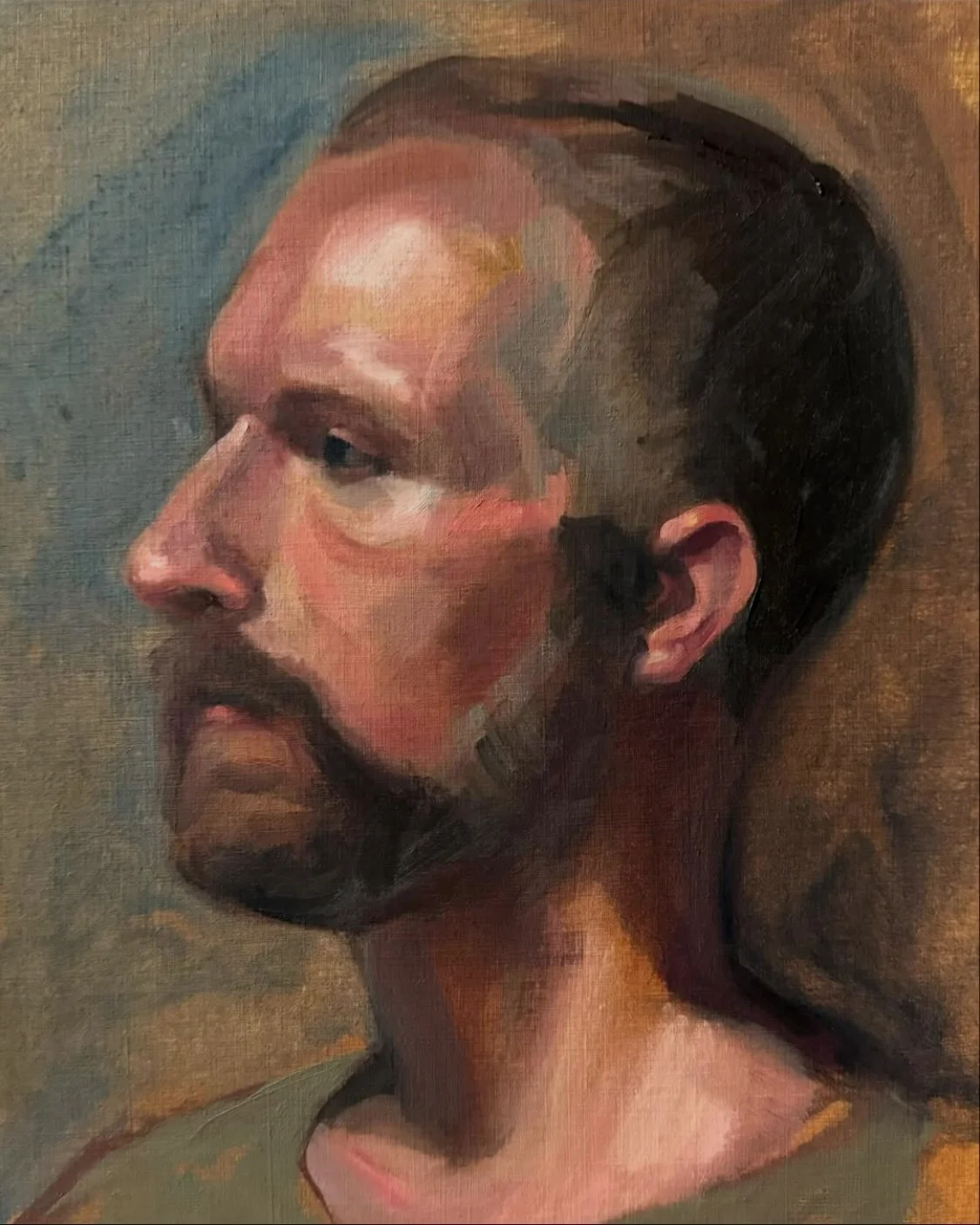
Bring together drawing, value structure, and color theory to paint the live model portrait. Students focus on skull geometry, feature alignment, skin tones, and capturing likeness, concluding with a portfolio documentation audit. Outcome: One master oil portrait from life and SlideRoom-ready digital application files.


Tuition

  • Single 6-Week Module: $500 (All supplies & model fees included)

  • Repeat Student Discount (15% Off): $425 (Use code DOJOFAM at checkout after your first module)

  • Full Academic Year Pass (All 5 Modules - 20% Off): $2,000 (Save $500 total — get 1 module free!)
SESSION I | CAST DRAWING & COMPARATIVE SIGHTING (FULL)

Sep 20 – Oct 25 |Sundays 1 – 4:30 pm

Media: Graphite, Nitram Charcoal, & Tonal Paper on 3D Plaster Casts

Tuition: $500 (All supplies included)

Instructor: Danny Grant

Course Description

Precision is the foundation of artistic freedom. Session 1 introduces students to the core observational mechanics used by classical ateliers for centuries: comparative measurement. Working directly from three-dimensional plaster casts, students learn to train their eyes to judge spatial relationships, proportional ratios, and angles without relying on tracing or mechanical grids.

Students progress from constructing a linear "envelope" to mapping internal landmarks and establishing strict light logic, culminating in a fully rendered cast study that demonstrates spatial volume and technical authority.

Weekly Curriculum Breakdown

  • Week 1: Comparative Sighting & The Envelope

    Establishing proportional sight lines, dropping vertical/horizontal plumb lines, and constructing the outer geometric envelope.

  • Week 2: Structural Subdivisions & Landmark Mapping

    Subdividing the envelope to locate internal feature relationships and anatomical landmarks.

  • Week 3: The Shadow Line (Terminator) & 2-Value Statement

    Mapping the boundary where light turns to shadow and massing in a flat, uniform shadow statement.

  • Week 4: Core Shadows & Reflected Light

    Establishing key value anchors: darkest darks vs. paper highlights, ambient occlusion, and subtle reflected light.

  • Week 5: Halftones & Form Modeling

    Rendering delicate turning halftones in the light family using controlled charcoal hatching.

  • Week 6: Edge Control & Portfolio Archiving

    Distinguishing hard, soft, firm, and lost edges; pulled highlights; photographing physical work for SlideRoom portals.

Portfolio Deliverables

  1. One Master Cast Drawing: A fully rendered, archival charcoal/graphite cast study showing advanced spatial depth.

  2. Process Pages: Preliminary construction sheets showcasing comparative measurement lines and plumb alignments.

SESSION II | Structural Figure Drawing & Anatomy (FULL)

Nov 1 – Dec 13 | Sundays | 1:00 – 4:30 pm (skips weekend of Thanksgiving)

Media: Vine/Compress Charcoal & Conté from Live Models

Tuition: $500 (All supplies & model fees included)

Instructor: OJinae Welch

Course Description

There is no test of observational skill greater than drawing the human figure. In Session 2, students apply comparative measurement directly to the dynamic, living form. Working with professional live models, young artists learn to capture gesture, weight distribution, and anatomical landmarks with confidence.

This session bridges quick structural gesture work with long-pose value development, teaching students how to simplify complex organic shapes into solid, volumetric forms.

Weekly Curriculum Breakdown

  • Week 1: Gesture & Weight (The Action Line)

    Capturing rhythm, balance, and weight distribution through rapid gesture poses (2–5 mins).

  • Week 2: The Ribcage, Pelvis, & Spine Relationship

    Understanding the primary anatomical masses, tilt, and twist of the torso.

  • Week 3: Comparative Sighting on the Figure

    Dropping plumb lines from anatomical landmarks (sternum, knees, ankles) to lock in accurate proportions.

  • Week 4: The Long Pose — Structural Block-In

    Establishing a multi-hour pose: mapping the figure’s shadow terminator line across muscle structures.

  • Week 5: Tonal Modeling of the Form

    Applying value logic to skin, muscle groups, and core shadows under direct studio lighting.

  • Week 6: Hands, Feet, & Final Figure Polishing

    Simplifying complex extremity geometry and finalizing the tonal figure piece.

Portfolio Deliverables

  1. One Polished Long-Pose Figure Drawing: A multi-hour structural tonal drawing from life.

  2. Gesture & Anatomy Process Sheet: A curated set of rapid structural studies demonstrating anatomical understanding.

SESSION III | Monochromatic Oil Painting & Value

Jan 3 – Feb 7 Sundays | 1 – 4:30 pm

Media: Oil Paint (Raw Umber, Flake/Titanium White) on Panels

Tuition: $500 (All supplies included)

Instructors: Danny Grant

Course Description

Jumping directly into full color can overwhelm a developing artist. Session 3 isolates the mechanics of oil painting by focusing entirely on value, paint application, and edge control using a single earth color and white (Grisaille/Tonal painting).

Students master brush control, solvent mixing, paint density, and "wipe-out" techniques before introducing hue. This module builds the crucial bridge from drawing into oil painting with confidence and precision.

Weekly Curriculum Breakdown

  • Week 1: Intro to Oil Mediums & The "Wipe-Out" Technique

    Understanding paint viscosity, solvents, mediums, and creating a value drawing by erasing paint off a toned panel.

  • Week 2: The Monochromatic Block-In

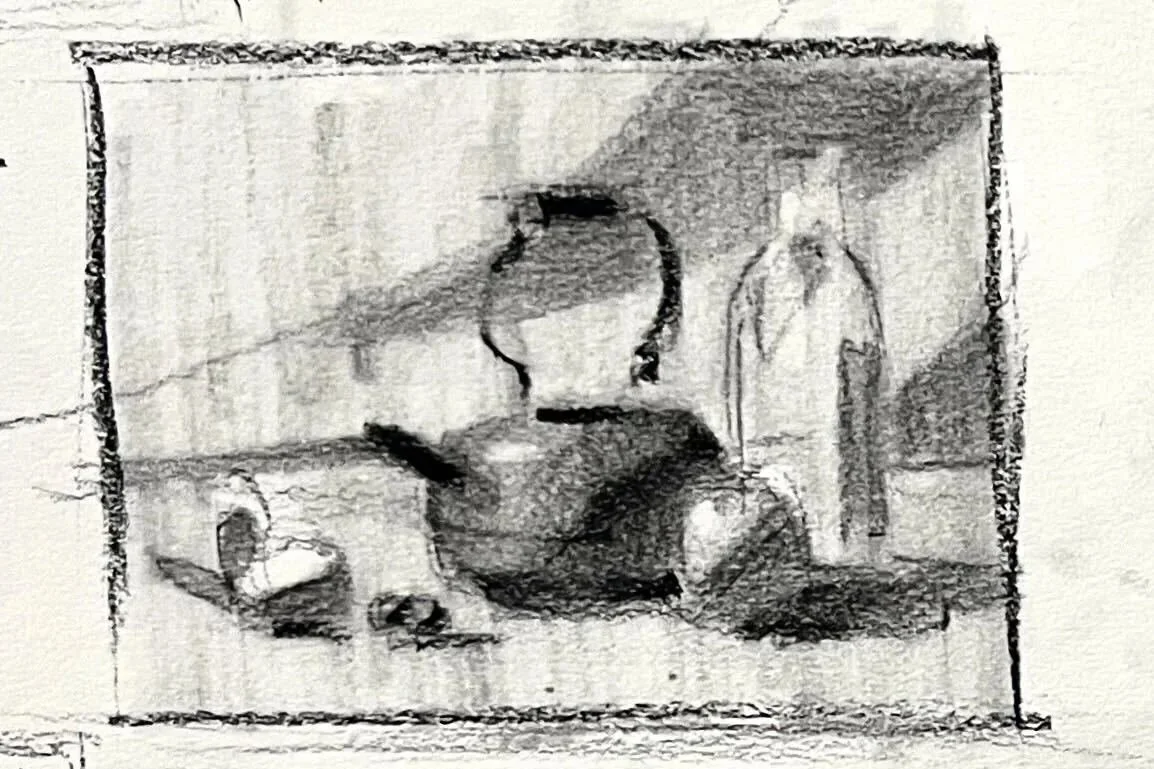
    Establishing layout and major shadow masses using Raw Umber and medium on a high-contrast still life setup.

  • Week 3: Opaque vs. Transparent Paint Application

    Learning to keep shadow areas thin and transparent while building up opaque lights.

  • Week 4: Edge Control in Paint

    Managing wet-on-wet paint edges: blending soft form transitions vs. maintaining crisp structural edges.

  • Week 5: Form Modeling in Value

    Building smooth, continuous value transitions and modeling complex surfaces in oil paint.

  • Week 6: Highlights, Glazes, & Care of Oil Paintings

    Applying thick impasto highlights, understanding varnish basics, and brush maintenance.

Portfolio Deliverables

  1. One Monochromatic Tonal Oil Study: A high-finish grisaille oil painting demonstrating form and paint handling.

  2. Value Scale Paint Study: A reference swatch sheet showcasing value transitions and edge control in oil.

SESSION IV | Classical Painting: Still Life & Portrait

Feb 14 – Mar 21 Sundays| 1 – 4:30 pm

Media: Oil Paint (The Zorn Palette: 4 Colors) on Panel/Canvas

Tuition: $500 (All supplies included)

Instructors: OJinae Welch

Course Description

Color power comes from constraint, not complexity. In Session 4, students step into color theory using the famous Zorn Palette—a legendary limited palette consisting of just four pigments: Titanium White, Yellow Ochre, Cadmium Red, and Ivory Black.

Because Ivory Black acts as a cool blue in mixtures, students learn how to create a full spectrum of vibrant skin tones, subtle greys, and muted greens. This module teaches students to translate drawing values directly into color temperature and hue.

Weekly Curriculum Breakdown

  • Week 1: Deconstructing the Zorn Palette

    Color wheel construction using 4 pigments; discovering how Black functions as a cool blue in mixtures.

  • Week 2: Color Temperature & Value Translation

    Understanding warm light vs. cool shadows and mixing specific color steps to match observed values.

  • Week 3: The Color Block-In (Observational Still Life)

    Applying an underpainting and laying down major color masses from direct observation.

  • Week 4: Form Building with Color

    Turning form across light source changes using hue shifts and temperature changes rather than just adding white or black.

  • Week 5: Color Harmony & Edge Refinement

    Balancing saturation, unifying backgrounds, and refining edge transitions in color.

  • Week 6: Final Varnishing & SlideRoom Digital Capture

    Final pass on details; workshop on photographing oil paintings without surface glare for college portals.

Portfolio Deliverables

  1. One Finished Limited-Palette Oil Painting: A rich, full-color observational still life or cast study.

  2. Zorn Palette Color Mixing Grid: A structured reference chart showing color range and temperature shifts.

SESSION V | Observational Portraiture & Portfolio Synthesis

Apr 4 – May 9 Sundays | 1 – 4:30 pm

Media: Oil Paint on Canvas from Live Models

Tuition: $500 (All supplies & model fees included)

Instructors: Denise

Course Description

The capstone module of our academic year program. Session 5 brings together everything students have learned—comparative measurement, value structure, paint handling, and color theory—and applies it to live observational portraiture.

Working from live models, students master the complex geometry of the human head, feature alignment, skin tone mixing, and capturing a likeness. The session finishes with a dedicated portfolio audit and digital file preparation pass.

Weekly Curriculum Breakdown

  • Week 1: Facial Structure & Skull Geometry

    Proportions of the head, planes of the face, and setting up a structural portrait block-in from life.

  • Week 2: Features in Detail

    Micro-geometry of the eyes, nose, mouth, and ears as extensions of the underlying skull structure.

  • Week 3: Skin Tone Mixing & Temperature Shifts

    Mixing accurate flesh palettes from warm light zones to cool reflected shadow tones.

  • Week 4: The Long Pose — Portrait Underpainting

    Executing a long-pose portrait: wiped-out underpainting moving into color block-in from a live model.

  • Week 5: Turning Form on the Head & Edge Hierarchy

    Refining soft transitions on cheeks/forehead vs. hard edges along hair lines and feature accents.

  • Week 6: Portfolio Synthesis & SlideRoom Workshop

    Final portrait touches; portfolio review; digital editing, cropping, and cataloging for college submissions.

Portfolio Deliverables

  1. One Master Portrait Painting in Oil: A fully developed portrait from a live model showing likeness, form, and color control.

  2. SlideRoom Ready Digital Portfolio File: High-resolution, color-accurate digital exports formatted for university application portals.